
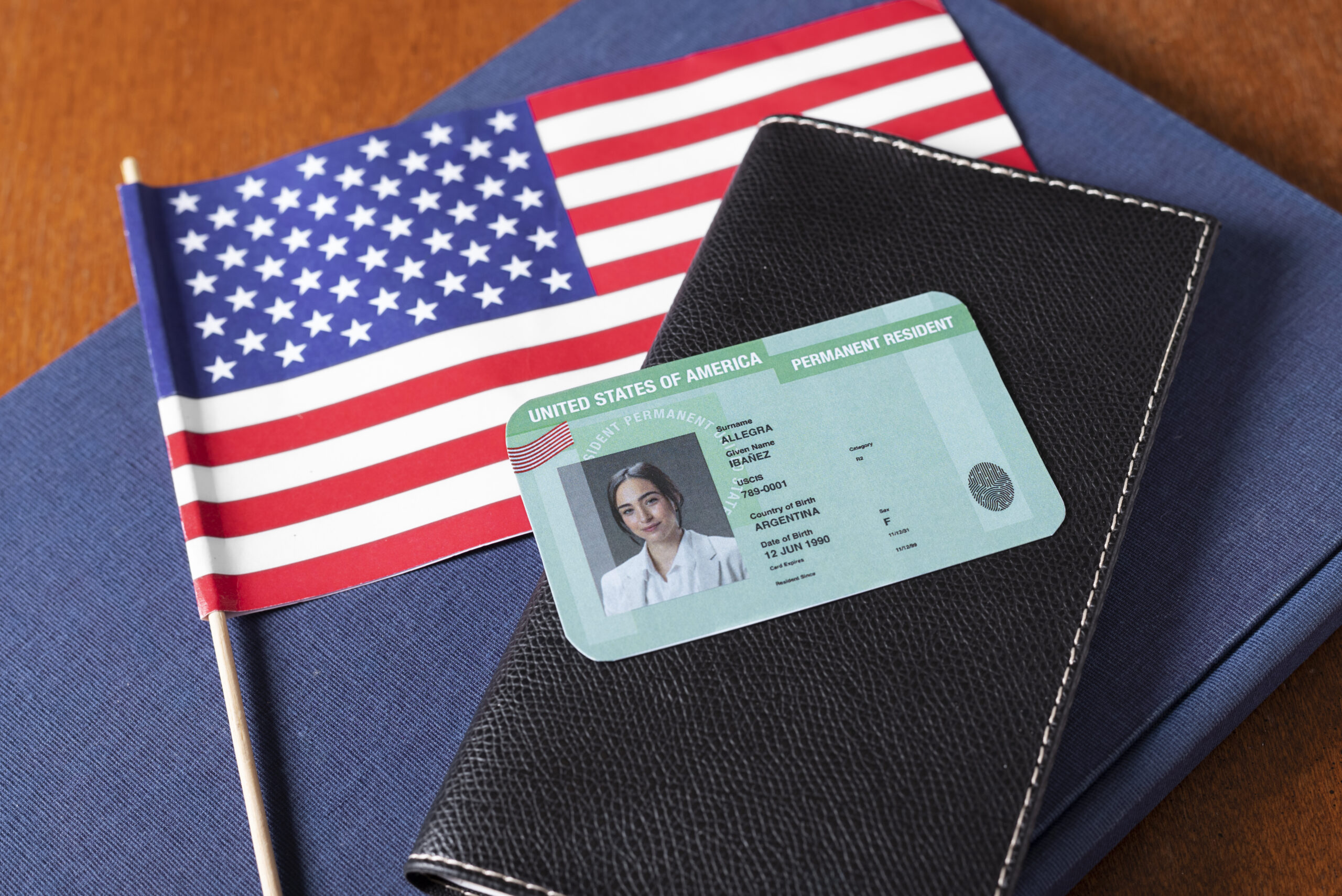
For many immigrants, the green card is the legal foundation for long-term stability in the United States. It can mean the ability to work lawfully, remain with family, travel with greater security, and eventually pursue U.S. citizenship. But one of the biggest mistakes people make is assuming that there is only one way to get a green card.
There is no single “green card process.” There are several different pathways, each with its own eligibility rules, risks, timelines, forms, waivers, and strategy. A person who qualifies through marriage may face completely different issues from a person applying through employment, asylum, VAWA, a U visa, Special Immigrant Juvenile classification, or immigration court.
Choosing the correct pathway from the beginning matters. The wrong filing can lead to delays, Requests for Evidence, denials, removal proceedings, or even bars to returning to the United States. The right strategy begins with a clear understanding of which pathway fits your facts.
This guide explains the major green card options in plain language and highlights the issues applicants should consider before filing.
What a Green Card Actually Means
A green card, formally known as lawful permanent resident status, allows a person to live and work permanently in the United States. It is not citizenship, but it is one of the most important immigration statuses a person can obtain.
Lawful permanent residents may generally work for any employer, live permanently in the United States, sponsor certain family members, and apply for naturalization after meeting the required eligibility period. Most permanent resident cards are valid for 10 years, though conditional residents, such as certain marriage-based and investor-based applicants, may initially receive a two-year card and must later remove conditions.
The card itself may expire, but permanent resident status does not automatically end simply because the physical card expires. However, green card holders still have responsibilities. Extended travel outside the United States, certain criminal convictions, abandonment of residence, or immigration fraud can place permanent residence at risk.
Before Filing: Are You Adjusting Status or Consular Processing?
Before discussing the categories, applicants must understand two different procedures.
Adjustment of status is the process of applying for a green card from inside the United States, usually by filing Form I-485 with USCIS. It may be available to applicants who were inspected and admitted or paroled, have an immigrant visa immediately available, are admissible, and meet the requirements of their specific category.
Consular processing is the process of applying for an immigrant visa through a U.S. embassy or consulate abroad after the underlying petition is approved. This route is common for family members living outside the United States and for applicants who cannot adjust status from inside the country.
The choice between adjustment and consular processing is not always simple. Prior unlawful presence, entry without inspection, prior removal orders, misrepresentation, criminal history, or travel restrictions can change the strategy completely. Applicants should not assume they can leave the United States and return without first evaluating possible three-year, ten-year, or permanent bars.
1. Family-Based Green Cards
Family-based immigration remains one of the most common ways people obtain permanent residence. A qualifying U.S. citizen or lawful permanent resident may file a petition for certain relatives.
U.S. citizens may generally petition for spouses, unmarried children under 21, parents, married and unmarried adult children, and siblings. Lawful permanent residents may generally petition for spouses and unmarried children. The first step is usually Form I-130, Petition for Alien Relative, which establishes the qualifying family relationship.
Immediate relatives of U.S. citizens—spouses, parents, and unmarried children under 21—are treated differently from family preference categories. Immediate relatives are not subject to annual visa caps, which often makes their cases move more directly once eligibility is established. Family preference categories, such as siblings of U.S. citizens or adult children, are subject to visa bulletin backlogs and may involve years of waiting.
Family cases are not “automatic.” USCIS or the consular officer may examine whether the relationship is real, whether the applicant is admissible, whether the sponsor meets financial requirements, and whether any prior immigration history creates a problem. Marriage-based cases, in particular, require strong evidence of a bona fide marriage—not merely a marriage certificate.
2. VAWA Self-Petitions
The Violence Against Women Act, commonly called VAWA, provides an important path to permanent residence for certain abused spouses, children, and parents of U.S. citizens or lawful permanent residents.
Despite the name, VAWA is not limited to women. Eligible survivors of any gender may qualify. A person may be eligible to self-petition if they were subjected to battery or extreme cruelty by a qualifying U.S. citizen or lawful permanent resident spouse or parent, or in certain cases by a U.S. citizen adult son or daughter.
VAWA is powerful because the applicant may file without the abuser’s knowledge, consent, signature, or participation. In many cases, VAWA can provide a pathway to employment authorization and eventually a green card.
These cases require careful preparation. Evidence may include police reports, medical records, protective orders, psychological evaluations, affidavits, text messages, photographs, financial control evidence, witness statements, and proof of the qualifying relationship. Many survivors do not have police reports, and that does not automatically defeat the case. The legal issue is whether the total evidence establishes eligibility.
3. U Visa to Green Card
The U visa is available to certain victims of qualifying criminal activity who suffered substantial physical or mental abuse and were helpful, are helpful, or are likely to be helpful to law enforcement or government officials in the investigation or prosecution of the crime.
Common qualifying crimes may include domestic violence, sexual assault, felonious assault, trafficking-related crimes, kidnapping, blackmail, extortion, and other serious offenses listed in the statute and regulations.
A U visa does not create an immediate green card. Generally, a person must first obtain U nonimmigrant status and later meet the requirements for permanent residence, including the required period of continuous physical presence and continued eligibility.
U visa cases are highly evidence-driven.The law enforcement certification is important, but it is not the entire case. The applicant must still prove victimization, harm, helpfulness, admissibility or waiver eligibility, and the overall strength of the application.
4. T Visa to Green Card
The T visa provides protection for certain victims of human trafficking. Human trafficking may involve sex trafficking, forced labor, involuntary servitude, debt bondage, or other forms of coercion and exploitation.
Like the U visa, the T visa can become a pathway to permanent residence after the applicant meets specific requirements. T visa applicants often must show that they complied with reasonable requests from law enforcement, unless an exception applies, and that they meet the requirements for adjustment.
These cases require sensitivity, confidentiality, and careful legal development. Many trafficking survivors are afraid to come forward, may have limited documentation, or may have immigration violations connected to the trafficking itself. Those facts must be presented strategically and humanely.
5. Asylum and Refugee-Based Green Cards
A person granted asylum in the United States may generally apply for a green card after one year of being granted asylum, if they continue to meet eligibility requirements. Refugees are also eligible for permanent residence after meeting the required period of physical presence in the United States.
Asylum-based adjustment is especially important because asylum itself is a protected status, but it is not the same as permanent residence. A green card gives greater stability and places the person on a clearer path toward citizenship.
Applicants should understand, however, that asylum or refugee adjustment can still involve security checks, admissibility review, criminal history analysis, and questions about whether the person remains eligible. A prior asylum grant does not mean USCIS will ignore later criminal conduct, fraud issues, or changed circumstances.
6. Special Immigrant Juvenile Classification
Special Immigrant Juvenile classification, commonly called SIJ or SIJS, may help certain children and young people who have been abused, abandoned, or neglected by one or both parents.
SIJ cases are unique because they usually involve both state court and immigration law. Before USCIS can approve SIJ classification, a state juvenile court generally must issue findings addressing dependency or custody, parental reunification, and the child’s best interest.
Once SIJ classification is approved and a visa number is available, the child may be able to apply for a green card. These cases require careful timing because age, family court jurisdiction, state court orders, and visa availability all matter.
SIJ can be life-changing for eligible youth, but it must be handled carefully. A weak or incomplete state court order can create serious immigration problems later.
7. Employment-Based Green Cards
Employment-based immigration is another major pathway to permanent residence. It may be available to professionals, skilled workers, executives, researchers, investors, entrepreneurs, individuals with extraordinary ability, and workers whose employment serves the national interest.
The main employment-based categories include:
EB-1: for individuals with extraordinary ability, outstanding professors or researchers, and certain multinational executives or managers.
EB-2: for professionals with advanced degrees or exceptional ability, including some applicants who may qualify for a National Interest Waiver.
EB-3: for skilled workers, professionals, and certain other workers.
EB-4: for certain special immigrants, including some religious workers and other protected categories.
EB-5: for qualifying investors who meet investment and job-creation requirements.
Many employment-based cases require an employer sponsor and, in some categories, a PERM labor certification from the Department of Labor. Other cases, such as EB-1A and National Interest Waiver cases, may allow self-petitioning.
Employment-based green card strategy depends heavily on the applicant’s qualifications, immigration history, current status, visa bulletin availability, employer support, and whether adjustment or consular processing is safer.
8. Diversity Visa Lottery
The Diversity Immigrant Visa Program, often called the green card lottery, makes a limited number of immigrant visas available each year to people from countries with historically lower rates of immigration to the United States.
Selection in the lottery is not the same as approval. A selected applicant must still meet education or work experience requirements, pass background checks, prove admissibility, and complete either adjustment of status or consular processing before the fiscal-year deadline.
This pathway is time-sensitive. Missing the deadline generally means losing the opportunity for that fiscal year.
9. Green Cards Through Immigration Court
Some people pursue permanent residence or related relief while in removal proceedings before an immigration judge. This may include adjustment of status before the court, cancellation of removal, asylum-related relief, VAWA cancellation, or other forms of relief depending on the facts.
Immigration court cases are high-stakes. The applicant may be seeking a green card or protection from removal at the same time the government is trying to deport them. Evidence, testimony, credibility, criminal history, family hardship, and legal eligibility must be prepared with precision.
A person in removal proceedings should not file randomly with USCIS without understanding which agency has jurisdiction and how the court case affects the strategy.
10. DACA, TPS, and Other Temporary Protections
DACA and TPS are important protections, but they do not automatically create a green card. However, some people with DACA or TPS may have separate green card pathways through family, employment, humanitarian relief, or other categories.
For example, a TPS holder may have a U.S. citizen spouse or an employer willing to sponsor them. A DACA recipient may later qualify through marriage, employment, VAWA, U visa, or another category. The critical question is whether the person has a lawful admission or parole, whether a waiver is needed, whether the priority date is current, and whether the applicant is otherwise admissible.
This is why temporary status should be evaluated as part of a broader immigration strategy, not viewed as the final destination.
Why Choosing the Wrong Pathway Can Be Dangerous
The wrong green card strategy can create serious consequences. Some of the most common problems include unlawful presence, prior removal orders, misrepresentation, unauthorized employment, criminal history, weak financial sponsorship, and filing before a visa number is available.
Unlawful presence is especially dangerous. A person who leaves the United States after accruing more than 180 days of unlawful presence may trigger a three-year bar. A person who leaves after more than one year of unlawful presence may trigger a ten-year bar. Some applicants may qualify for waivers, but waivers are not automatic and require careful preparation.
Misrepresentation is another serious issue. A false statement on a visa application, at the airport, in a USCIS filing, or during an interview can create a lifetime inadmissibility problem unless a waiver is available and approved.
Criminal history must also be reviewed carefully. Even dismissed charges can raise questions. Certain convictions may trigger inadmissibility, removability, mandatory detention, or denial of discretionary relief. Noncitizens should never plead guilty in criminal court without understanding immigration consequences.
The Green Card Strategy Checklist
Before filing, every applicant should ask these questions:
- What is my strongest green card category?
- Am I applying through family, employment, humanitarian relief, court, diversity visa, or another pathway?
- Am I eligible to adjust status in the United States, or must I consular process abroad?
- Was I inspected and admitted or paroled into the United States?
- Have I ever overstayed, worked without authorization, used false documents, or made inconsistent statements?
- Do I have any criminal history, even if the case was dismissed?
- Do I have a prior removal order or missed immigration court hearing?
- Is my priority date current under the Visa Bulletin?
- Do I need a waiver before filing or before leaving the United States?
- Do I have the required financial sponsorship, medical exam, civil documents, and supporting evidence?
If any answer is uncertain, the case should be reviewed before filing.
Common Mistakes to Avoid
- Do not file just because someone with a similar story was approved. Immigration is fact-specific.
- Do not rely on a notario or unlicensed document preparer for legal advice. Mistakes can cause denials, fraud findings, and removal proceedings.
- Do not ignore the Visa Bulletin if you are in a preference category.
- Do not travel while an adjustment application is pending unless you understand advance parole and abandonment risks.
- Do not assume marriage to a U.S. citizen cures every immigration problem.
- Do not hide arrests, prior filings, denials, or old immigration encounters from your attorney.
- Do not respond casually to an RFE or Notice of Intent to Deny. These notices require careful legal analysis and strong evidence.
Final Thoughts
Getting a green card is one of the most important legal steps an immigrant can take in the United States. But the question is not simply, “How do I get a green card?” The better question is: “Which green card pathway is legally available, strategically safe, and best suited to my history?”
For some people, the answer is family sponsorship. For others, it may be employment-based immigration, asylum adjustment, VAWA, U visa, T visa, SIJ classification, diversity visa, cancellation of removal, or consular processing. The correct pathway depends on the facts.
A green card case should not be filed blindly. Applicants should not rely on rumors, assume another person’s approval controls their own case, or ignore facts that may require a different strategy.
At Alonge Law Firm, P.C., we help clients evaluate their immigration history, identify available green card options, address risks, prepare strong filings, and choose the strategy most likely to protect their future.
If you are unsure which green card pathway may apply to you, schedule a consultation with Alonge Law Firm, P.C. before you file.
Disclaimer: This article is for general information only and does not constitute legal advice. Every case is different. Reading this article does not create an attorney-client relationship.


