
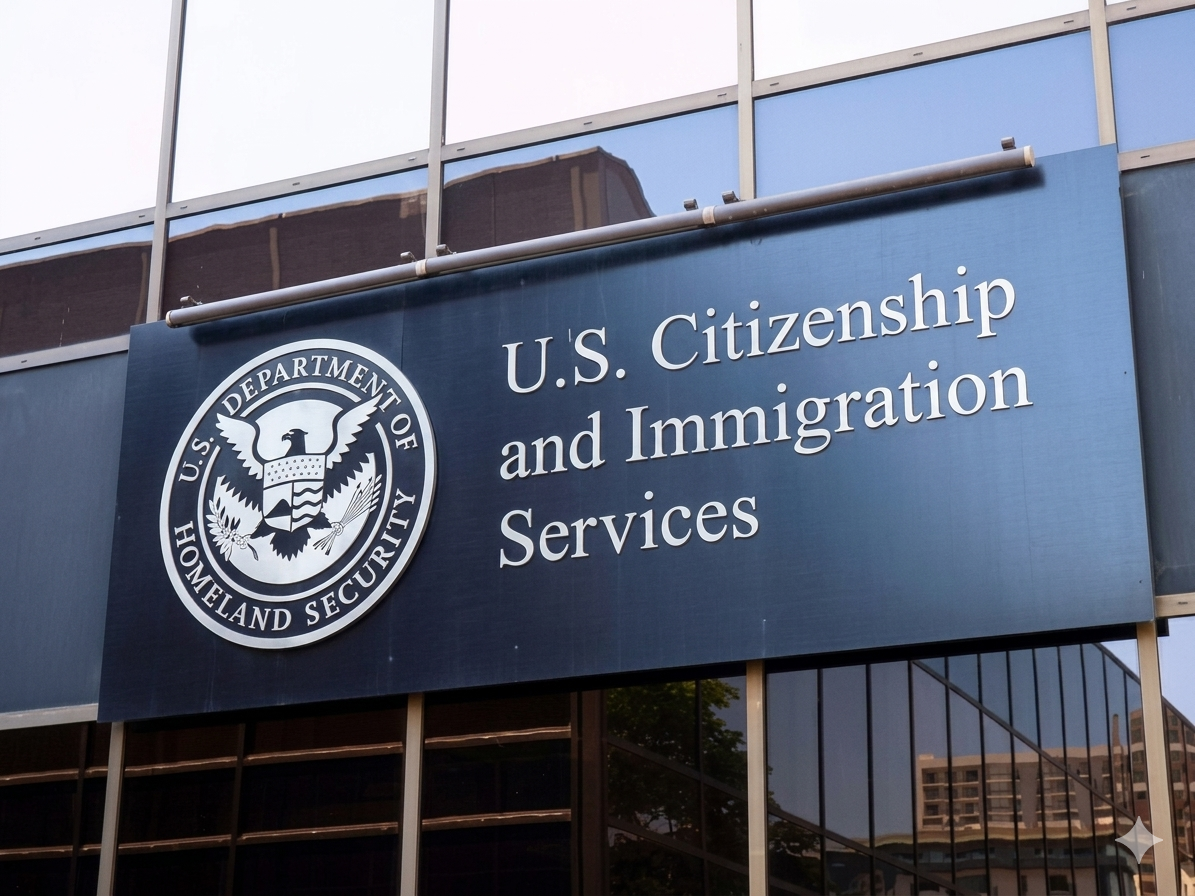
On May 21, 2026, U.S. Citizenship and Immigration Services issued Policy Memorandum PM-602-0199, titled “Adjustment of Status is a Matter of Discretion and Administrative Grace, and an Extraordinary Relief that Permits Applicants to Dispense with the Ordinary Consular Visa Process.” The memo has caused significant concern among applicants, families, employers, and immigration practitioners because it signals a renewed and more forceful emphasis on the discretionary nature of adjustment of status.
Adjustment of status, commonly called AOS, is the process that allows certain people already inside the United States to apply for lawful permanent residence without leaving the country for immigrant visa processing at a U.S. embassy or consulate abroad. For many families and workers, this process is essential. It allows applicants to remain with family, continue employment, avoid uncertain consular delays, and pursue permanent residence from within the United States.
The new memo does not abolish adjustment of status. It does not rewrite the Immigration and Nationality Act. It does not mean every pending I-485 will be denied. But it does send an important policy message: USCIS is reminding officers that adjustment of status is not automatic, even when an applicant appears to satisfy the basic statutory requirements.
This is a developing issue. Because the memo is new, we have not yet seen enough adjudication patterns, Requests for Evidence, Notices of Intent to Deny, or discretionary denials to know exactly how USCIS will apply it in practice. At Alonge Law Firm, P.C., we are actively studying the memorandum, monitoring implementation, and developing strategies to preserve and protect our clients’ rights.
What Is Adjustment of Status?
Adjustment of status allows eligible individuals physically present in the United States to seek a green card without departing for consular processing abroad.
Applicants may pursue adjustment based on different categories, including:
- marriage to a U.S. citizen;
- an approved family-based petition;
- an employment-based petition;
- certain humanitarian classifications; or
- another qualifying immigrant category.
For many people, adjustment of status is not merely a procedural option. It is the difference between staying with their family in the United States and facing the uncertainty, expense, and risk of consular processing abroad.
That is why this memo matters.
What the New USCIS Memo Actually Says
The memo emphasizes that adjustment of status is a discretionary benefit, not an entitlement. In other words, USCIS is telling officers that meeting the technical requirements for adjustment does not automatically require approval. Officers may still consider whether the applicant deserves a favorable exercise of discretion under the totality of the circumstances.
The memo also frames adjustment as an extraordinary mechanism because it allows a foreign national to obtain permanent residence from inside the United States instead of completing the ordinary immigrant visa process abroad.
Put simply: USCIS is telling officers to look beyond the forms and ask whether the full record supports approval.
Why the Memo Is Important
The principle that adjustment of status is discretionary is not new. Immigration law has long recognized that USCIS may weigh positive and negative factors when deciding certain adjustment applications.
What is new is the force, timing, and public framing of this memorandum.
USCIS is not simply reminding officers of an old rule. It is signaling a more demanding approach to discretion. The agency’s public messaging suggests that USCIS wants adjustment of status to be treated less like a routine domestic green card process and more like an exceptional benefit that must be affirmatively justified.
This does not mean applicants should panic. It does mean applicants should prepare carefully.
A weak filing that only proves basic eligibility may no longer be enough in cases where negative factors exist. Applicants should be prepared to show not only that they qualify, but also why USCIS should exercise discretion favorably.
What We Do Not Yet Know
Because the memo is new, its full practical impact remains uncertain.
At this stage, we do not yet know:
- whether USCIS officers will apply the memo uniformly across field offices;
- whether family-based and employment-based cases will be treated differently;
- whether immediate relatives of U.S. citizens will continue receiving traditionally favorable discretionary treatment;
- how officers will evaluate dual-intent visa holders, such as H-1B and L-1 workers;
- whether USCIS will issue more RFEs or NOIDs before discretionary denials;
- whether courts will limit USCIS if the memo is applied too broadly; or
- whether USCIS will issue additional category-specific guidance.
This is why the correct response is not fear. The correct response is strategy.
What Factors May Matter More Now
The memo indicates that officers may give greater attention to the applicant’s overall immigration history and conduct.
A. Prior Immigration Violations
USCIS may examine whether the applicant violated the terms of a visa, parole, or prior immigration status. This may include overstays, unauthorized employment, failure to maintain student status, or other failures to comply with the terms of admission.
B. Conduct After Entry
USCIS may look at whether the applicant’s conduct after entering the United States was consistent with the stated purpose of the visa, admission, or parole. For example, if a person entered temporarily and quickly pursued permanent residence, USCIS may scrutinize whether the facts suggest a problem with intent or prior representations.
C. Fraud or Misrepresentation
Any prior false statement, fraudulent document, inconsistent filing, or misrepresentation to USCIS, the Department of State, CBP, or another government agency may become a serious negative factor.
D. Criminal History
Arrests, charges, convictions, protective orders, or related conduct may be reviewed as part of the discretionary analysis, even where the issue does not automatically make the applicant inadmissible.
E. Positive Equities
Applicants may need to affirmatively document positive factors, including:
- U.S. citizen or lawful permanent resident family members;
- length of residence in the United States;
- employment history;
- payment of taxes;
- community involvement;
- hardship to family members;
- evidence of rehabilitation where relevant;
- humanitarian concerns; and
- compliance with immigration law.
In this new environment, adjustment filings may need to tell a stronger and more complete story.
Dual Intent Still Matters, But It May Not End the Inquiry
The memo recognizes that certain nonimmigrant classifications permit dual intent, including H-1B and L-1 status. Dual intent means a person may hold temporary status while also pursuing permanent residence. That remains important.
However, maintaining lawful dual-intent status may not, by itself, guarantee a favorable exercise of discretion. Officers may still review the full record, including immigration compliance, prior filings, conduct after admission, and positive equities.
For employment-based applicants, this means lawful status remains valuable, but the case should still be carefully documented.
What This Memo Does Not Mean
It is equally important to avoid overreading the memo.
The memo does not mean:
- adjustment of status has been abolished;
- every pending I-485 will be denied;
- marriage-based green card cases are no longer viable;
- employment-based adjustment is unavailable;
- eligible applicants should automatically leave the United States; or
- USCIS can ignore federal law.
A policy memorandum cannot override the Immigration and Nationality Act, federal regulations, constitutional limits, or judicial review.
But the memo is still significant. It tells applicants and attorneys that discretion must be addressed carefully, especially where any negative fact exists.
What Applicants Should Do Now
A. Do Not Panic or Withdraw a Pending Case Without Legal Advice
If you already have a pending I-485, do not withdraw it based on headlines or social media commentary. A pending adjustment case should be reviewed by an attorney before any major decision is made.
B. Review Your Entire Immigration History
Applicants should carefully review:
- all prior entries into the United States;
- visa applications;
- prior denials;
- overstays;
- unauthorized employment;
- gaps in status;
- prior removal proceedings;
- criminal history; and
- inconsistent statements in prior filings.
The goal is to identify weaknesses before USCIS does.
C. Build a Strong Discretionary Record
A strong filing should include more than forms and civil documents. Where appropriate, applicants should consider submitting evidence of:
- family unity;
- hardship;
- stable employment;
- tax compliance;
- good moral character;
- community involvement;
- humanitarian need; and
- rehabilitation.
This is especially important where the applicant has any negative factor.
D. Prepare for More RFEs or NOIDs
USCIS may issue more Requests for Evidence or Notices of Intent to Deny as officers document discretionary analysis more carefully. A discretionary RFE or NOID should not be answered casually. It requires a strategic legal response.
E. Be Careful With International Travel
Applicants with pending adjustment cases should consult counsel before traveling internationally. Departure from the United States may trigger separate issues involving advance parole, inadmissibility, visa issuance, consular delays, or country-specific travel restrictions.
F. Consult Counsel Before Choosing Adjustment or Consular Processing
Adjustment may remain the best option for many applicants. For others, consular processing may need to be evaluated carefully. The right path depends on immigration history, visa category, inadmissibility risks, family circumstances, processing conditions abroad, and the strength of the discretionary record.
How Alonge Law Firm Is Responding
Because this memo is new and its implementation is still developing, Alonge Law Firm, P.C. is approaching it with urgency, caution, and strategy.
We are:
- studying the memorandum and related legal authorities;
- monitoring USCIS adjudication patterns;
- watching for new RFE, NOID, and denial language;
- identifying arguments to preserve clients’ rights;
- strengthening positive-equity evidence in adjustment filings;
- advising clients on adjustment versus consular processing risks;
- preparing discretionary legal briefs where appropriate; and
- evaluating challenges to legally improper decisions where necessary.
Our goal is not simply to react to the memo. Our goal is to anticipate how USCIS may apply it and prepare stronger, more protective filings for our clients.
Final Thoughts
USCIS’s new adjustment-of-status memorandum is important. It signals that USCIS may place greater emphasis on discretion and may require applicants to present stronger evidence that they merit approval.
But the memo is also new. We have not yet seen enough real-world adjudications to know how broadly or harshly USCIS will apply it. Further guidance, litigation, and agency practice may shape the memo’s effect in the coming months.
For now, the best approach is preparation, not fear.
If you have a pending or planned adjustment-of-status application, Alonge Law Firm, P.C. can help review your case, identify discretionary risks, strengthen your evidence, and develop a strategy to protect your path to permanent residence.
We will continue to monitor this issue closely and provide updates as USCIS implementation becomes clearer.
This article is for general information only and does not constitute legal advice. Reading this article does not create an attorney-client relationship.
Source note: This article is based on USCIS Policy Memorandum PM-602-0199, issued May 21, 2026.


